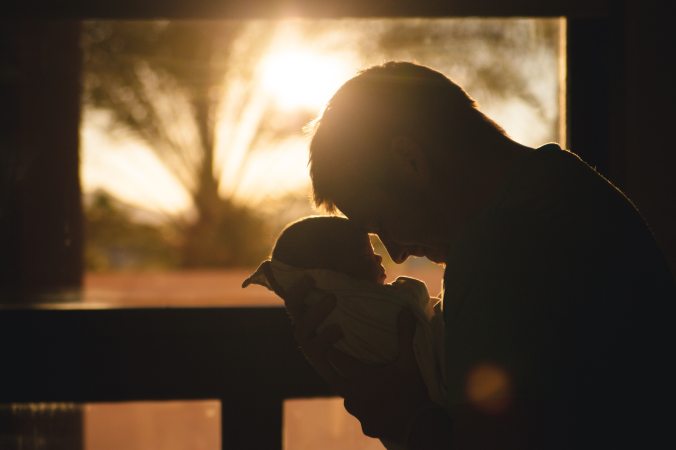
Having Contact with your Grandchildren

grandparentsToday marks the UK’s ‘National Grandparent’s Day

The bond between a grandparent and their grandchild is often regarded as one of the most precious relationships in life.

Grandparents are free of the stresses of parenting and can simply enjoy a fun and loving relationship with their grandchild.

Often this relationship can be of great benefit, not only to both grandparent and grandchild but also to busy parents who can have some valued time off from parenting.

But what happens to those grandparents for whom a relationship with their grandchild is impossible due to refusal by either or both parents to allow them to have contact time with their grandchildren? Often this can happen when the parents have separated and acrimony develops amongst the wider family.

I am not being allowed to see my grandchild – what can I do?

If you are a grandparent who is being refused contact with your grandchild, you can make an application to the Court for a Contact Order.

What is a Contact Order?

A Contact Order would allow you Court-ordered contact with your grandchild. This application would be made under the Children Order (NI) 1995.

What is the process for applying for a Contact Order?

At first instance, you must seek permission from the Court to bring an application for a Contact Order. Permission is normally sought at the same time as making the actual application and in all but exceptional circumstances this permission is granted. Once permission has been granted, the Court then considers in more general terms your application for contact.

Who would be involved in contact proceedings?

The Court then considers in more general terms the grandparent’s application for contact. Each parent would be a party in this application. They are entitled ask the Court to consider any objections which they may have in relation to contact.

What does the Court have to consider when making a Contact Order?

The Court would consider all the circumstances of the case and in particular the best interests of the grandchild involved. The Court may ask a Court appointed social worker, known as a Court Children’s Officer, to speak to your grandchild in order to establish what his/her views are in relation to having conatct with you. Your grandchild’s views will be taken into account however how much weight the Court places on their views will depend on their age and understanding – the Court is will consider the wishes and feelings of a 13 year old much more than they would of a 5 year old.

How much contact can I expect to get with my grandchild?

Whilst Courts are sympathetic to grandparent’s applications for contact and are aware of the importance of such a relationship, a grandparent would not generally expect as much contact as a parent who is living apart from his/her children.

In some exceptional circumstances a grandparent may apply for their grandchild to reside with them. This would generally be in cases where the parents are not providing adequate care for their child. In these cases, a grandparent could apply for a Residence Order. If a grandparent is awarded a Residence Order, they automatically acquire Parental Responsibility for the child for so long as the Order remains in place. this means that they can have a right to make decisions that are in their grandchild’s best interests.

It is of course of benefit to all concerned if contact arrangments can be agreed between parents and grandparents without having to go through the Courts. However, it is no doubt reassuring to many grandparents that they are able to exercise grandparent’s rights via the Court if they are being refused contact with their grandchild.

If you would like any further information on the issue of grandparent contact, please feel free to contact us directly here or on email at kconnolly@fhanna.co.uk or alternatively leave your comments confidentially below

Go back

Your message has been sent

Warning
Warning
Warning

Warning.

Medical Treatment & Your Children

medical care

‘When Parents & Medics Collide’

Caring for a sick child comes with the territory of being a parent. From teething to the latest stomach bug to hit the school playground, all of us will have spent many a sleepless night nursing a crying child, trying our best to comfort them and wishing that there was something more we could do to make them feel better.

Thankfully, for most of us, a child’s sickness is fleeting – coughs are soon replaced by chuckles, and peace (as well as sleep!) returns to your home. However, for parents faced with looking after a seriously or chronically ill child, life is much more challenging.

The case of Aysha King

There is no better example of the difficulties faced by such parents than the case involving five-year old cancer sufferer Aysha King.

Aysha became the topic of much media and legal debate when his parents removed him, without his doctor’s knowledge, from hospital during his treatment for a brain tumour. They took Aysha abroad in a bid to get alternative treatment for him. It was reported that this treatment was unavailable on the NHS in the hospital that Aysha was being treated in, but it was treatment that Aysha’s parents, strongly believed would help him.

Aysha’s parents would say that they were trying to do what they believed was best for their very ill son. The UK authorities disagreed and legal applications were made to try and have Aysha returned to the UK against his parent’s wishes.

This case highlights the difficulties faced when parents and doctors are at loggerheads as to thebest way to medically treat a minor child.

It begs the question : –

Who should have the ultimate say when it comes to deciding what is best for a child in terms of medical care?

Parental Responsibility

In Northern Ireland, parents or relatives with ‘parental responsibility’ of a child have the right to consent to medical treatment on behalf of that child, provided the treatment is in the best interests of the child.

In the vast majority of cases, both the parents and the medical professionals treating a child will be in agreement as to the best course of treatment.

In practice, doctors are reluctant to override a parent’s strongly held views, particularly where both the advantages and disadvantages of treatment are finely balanced and it is unclear as to what is in the child’s best interests.

What if doctors and parents don’t agree on what is the best course of medical treatment for a child??

Where a doctor believes that a child’s parents are following a course of medical action which is not in the child’s interests, they can seek for the Court to decide on what is best for the child; meanwhile they will provide only emergency treatment to the child to preserve life or prevent serious deterioration in their condition.

Likewise, should parents wish a child to have treatment which a doctor feels is inappropriate, the parents can issue Court proceedings and ask the Court to decide what is in the child’s best interests.

What factors will a Court look at in these cases?

When considering all cases of this nature, the Court shall have regard to the human rights of both the parents and child.

Ultimately, however, the Court will consider the child’s welfare as the overriding consideration when looking at cases like this.

It is therefore unlikely that parents would be permitted by the Court to do the following:-

  • To proceed with medical treatment which is thought to be inappropriate.
  • To refuse medical treatment which is in the child’s best interests.

For example, where a child requires a blood transfusion to treat a serious illness, the refusal to agree to this treatment by a parent who objects because of their beliefs as a Jehovah’s Witness is unlikely to be deemed by the Court to be in the child’s best interests.

It goes without saying that in the event of a dispute between parents and medical professionals, all possible alternatives should be discussed thoroughly between the parties in an effort to reach an agreement before seeking the Court’s intervention.

Sympathetic and sound legal advice during this challenging time can help support parents making difficult decisions in their child’s best interests.

As always, we invite your comments on this topic – do you agree with the law?? Or do you believe parents should always have the final say when it comes to treatment of their children??
If you require more information on this topic, feel free to contact Claire or Karen directly.

Go back

Your message has been sent

Warning
Warning
Warning

Warning.

Father’s Rights

fathersrightsnew

Father’s Day is a celebration of fatherhood, paternal bonds and the influence of fathers in our lives.  It’s a day when children lavish daddy with cards, gifts, hugs and kisses and where fathers celebrate both the joys and rewards of having children.

Of course, the role of being a dad extends above and beyond one particular day and as any dad will know, along with the rewards of having children comes a lifetime of responsibility. It is the job of both parents to ensure that this responsibility is taken seriously and exercised in the best interests of their children.

This can sometimes be difficult to achieve when the parent’s relationship breaks down. Separation, particularly when the father and child no longer live together, can leave daddy feeling like his role in his child’s life is somehow diminished and less important.

This does not have to be the case. As a father, you can have Parental Responsibility for your child

What is Parental Responsibility?

Parental Responsibility is the legal term for the rights of each parent to be involved in making decisions in the best interest of their children.

It is defined in the Children (NI) Order 1995 as ‘all rights, duties, powers and responsibilities and authority which by law a parent has in relation to the child and his property.’

Do I have Parental Responsibility?

If you are married to the mother at the time of the child’s birth, you automatically get Parental Responsibility.

If you and the child’s mother are not married, Parental Responsibility is not automatic but you can get it n the following ways:-

  • If your child is born after December 2003 and you are named on the birth certificate
  • Through a formal written agreement with the mother
  • By obtaining a Parental Responsibility Order from the Court
  • By having a Residence Order in respect of your child.

What difference does having Parental Responsibility make?

Parental Responsibility is not a label to be worn by a father.

In practical terms, this responsibility gives you as the child’s father the right, for example,

  • To be involved in choosing their school
  • To be kept informed of their progress at school and sent copies of school reports.
  • To give consent to medical treatment
  • To determine your child’s religion
  • To be involved in choosing their child’s name and to agree any change in surname.

I have separated from my child’s mother – do I still have rights?

The short answer is yes.

Parental Responsibility goes some way to ensuring that you can continue to have a pro-active and beneficial input into your child’s life.

Where parents separate, it will often be the case that they can work out themselves where their children are to live and how much time they will spend with each parent.

However, if you cannot agree arrangement with your child’s mother, then you can apply to the Court and ask it to make decisions that are deemed to be in the best interests of your child.

  • The Court can decide where and with whom your child should live. This is known as a Residence Order.
  • In some cases, the Court may make a Joint Residence Order in favour of both parents, where the contact arrangements are such that your child will be spending time living in both your home and their mum’s home.
  • If your child lives with mum, the Court can decide on how much contact you can have with your child. This is known as Contact Orders.
Although in an ideal world it is better where possible for parents to agree issues concerning their children, the law is there to guarantee your child’s right to enjoy a relationship with both parents where this is in their best interests.

For further information on this topic, please feel free to contact Karen or Claire or alternatively leave us your comments below.


Go back

Your message has been sent

Warning
Warning
Warning

Warning.